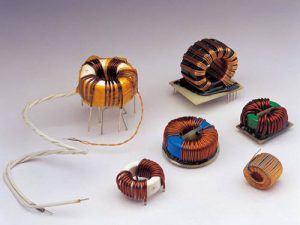

Inductance is the tendency of an electrical conductor to resist changes in the current flowing through it. Inductance is a fundamental parameter in the design of electrical and electronic circuits. Like resistance and capacitance, it is a fundamental electrical parameter that affects all circuits in some way. L is used to represent inductance, Henry is the international system of units for inductance. 1 Henry is defined as the amount of inductance required to produce an electromotive force of 1 volt in a conductor when the current in the conductor is changing at a rate of 1 ampere per second.
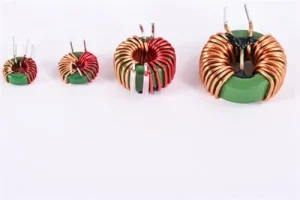
Inductance is defined as the ratio of the induced voltage to the rate of change of current causing it. It is a scaling factor that depends on the geometry of the circuit conductors and the permeability of nearby materials. [1] An electronic component designed to add inductance to a circuit is called an inductor. It usually consists of a coil or helix.
The number of turns in the coil, the area of the coil, the material of the core, and the length of the coil are all factors that can affect the value of the inductance. The greater the number of turns in the coil, the greater the inductance. For a given amount of coil current, more coils represent greater magnetic field force. Inductance is proportional to the coil area. The larger the coil area, the greater the inductance. For a given amount of field force, a larger coil area provides less resistance to the formation of magnetic field flux. The greater the permeability of the core around which the coil is wound, the greater the inductance. The longer the coil length, the lower the inductance. The shorter the coil length, the greater the inductance.